
2D character animation blends creativity and technical skill to bring characters to life through hand-drawn or digitally crafted frames. By mastering drawing fundamentals, character design, animation techniques, and storyboarding, aspiring animators can create captivating and emotionally engaging animations.
In the vibrant world of animation, 2D character animation holds a unique charm that captivates audiences with its timeless appeal. This art form, characterized by its ability to bring characters to life through hand-drawn or digitally crafted frames, requires a blend of creativity, technical skill, and storytelling prowess. For those aspiring to delve into this dynamic field, understanding the core aspects of 2D character animation is crucial.
What Is 2D Character Animation?
2D character animation creates the illusion of movement by showing a sequence of images in quick succession. The “2D” means the work happens in two dimensions, height and width, rather than in a 3D modelled space.
Movement alone is not the goal. A walking character is easy to animate; a walking character who is tired, nervous or late for something is harder, and that is where the art lies. Good 2D animators use posture, timing and expression to tell the audience who a character is without a word of dialogue.
There are two main ways to produce 2D animation:
| Approach | How it works | Typical use |
|---|---|---|
| Frame-by-frame (traditional) | Each drawing is created individually, often 12 or 24 per second of animation | Expressive character acting, effects, feature-style work |
| Cut-out / rigged (puppet) | A character is built from separate parts connected to a digital skeleton, then posed and moved | Television series, web series, explainer and game animation |
Many productions mix both: a rigged character for efficiency, with hand-drawn frames for moments that need more expression.
The Drawing Fundamentals Behind 2D Animation
Every stage of 2D animation depends on drawing. Before an animator can make a character move convincingly, they need to understand how bodies are built and how they occupy space.
- Life drawing trains you to observe anatomy, weight and gesture from real models.
- Perspective helps you place characters believably in an environment and draw backgrounds that hold together.
- Gesture and line of action let you capture the energy of a pose in a few strokes.
These skills take repeated practice. Most animators keep a sketchbook habit long after their formal training ends.
The Essence of 2D Character Animation
2D character animation is about more than just making drawings move; it’s about infusing personality and emotion into characters, creating a connection with the audience. The process starts with the basics of drawing, where animators learn to sketch characters with accurate anatomy, expressive faces, and dynamic poses. Mastery of these fundamentals is essential for creating believable and engaging characters.
Character Design: Crafting Unique Personalities
Character design decides how a character looks, and that look should say something about who they are. Designers work with:
- Shape language: round shapes tend to read as friendly, sharp angles as threatening, squares as solid or dependable.
- Silhouette: a strong design is recognizable from its outline alone.
- Proportion and colour: exaggerated features and a limited palette make a character readable at small sizes and in motion.
- Model sheets: turnarounds, expression sheets and pose sheets keep a character consistent when several artists animate it.
A design also has to be practical. If a character is too detailed, it becomes slow and costly to animate across hundreds of frames.
2D Animation Techniques: Bringing Drawings to Life
Animators rely on a shared set of principles first described by Disney animators Frank Thomas and Ollie Johnston in The Illusion of Life (1981). Among the most important for character work:
- Squash and stretch: gives a sense of weight and flexibility.
- Anticipation: a small movement that prepares the audience for a bigger one.
- Timing and spacing: the number and placement of drawings controls whether movement feels heavy, light, fast or slow.
- Follow-through and overlapping action: hair, clothing and limbs keep moving after the body stops.
- Arcs: natural movement follows curved paths, not straight lines.
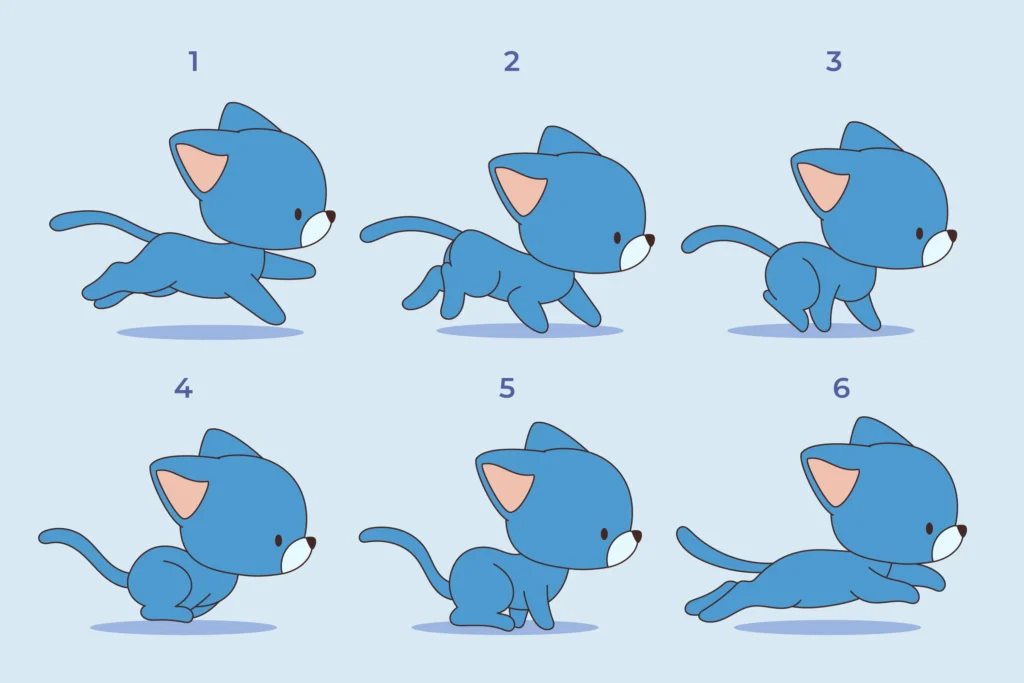
In a typical workflow, an animator draws or poses the key frames (the main storytelling poses), then adds breakdowns and in-betweens to smooth the motion. In rigged animation, character rigging sets up the controls, pivots and deformers that let the puppet move without breaking.
Storyboarding: Planning the Animation
A storyboard is the visual plan for an animated sequence. It shows each shot, the camera angle, the staging of characters and the basic action, usually as a series of rough panels with notes.
Storyboards are used to:
- test whether a scene reads clearly before animation begins;
- plan camera moves, cuts and pacing;
- catch problems early, when they are cheap to fix.
Storyboards are often cut together with temporary sound into an animatic, a rough timed version of the sequence that becomes the blueprint for the animators.
2D Animation Software: Toon Boom Harmony, Storyboard Pro and Adobe Tools
Modern 2D animation heavily relies on digital tools and software, which have revolutionized the industry. Programs like Adobe Animate, Toon Boom Harmony, Toon Boom Storyboard Pro, Photoshop, After Effects and Premiere provide animators with a suite of tools for drawing, rigging, and animating characters. These technologies offer greater flexibility and efficiency, enabling animators to experiment with different techniques and styles. Digital tools also facilitate collaboration among animators, leading to the creation of more diverse and engaging animations. On the flipside, 2D animation plays an increasingly pivotal role in numerous popular video games.
Most professional 2D animation is now produced digitally. Common tools include:
| Tool | What it is used for |
|---|---|
| Toon Boom Harmony | Frame-by-frame and rigged character animation, compositing |
| Toon Boom Storyboard Pro | Storyboards and animatics |
| Adobe Photoshop | Character art, backgrounds and painting |
| Adobe After Effects | Compositing, effects and motion graphics |
| Adobe Premiere | Editing sequences and demo reels |
| Adobe Animate | Vector-based animation, often for web and short-form work |
Software changes quickly, so the more lasting skill is understanding the animation principles underneath it. A strong animator can move between tools; the drawing and timing knowledge carries over.
Building a 2D Animation Portfolio and Demo Reel
For aspiring animators, developing a strong portfolio is essential. A well-curated portfolio showcases an individual’s skills, creativity, and versatility. It should include a variety of works, demonstrating proficiency in different aspects of 2D animation, such as character design, movement, and storytelling. A compelling portfolio is what studios and clients typically review when assessing an animator’s work, and more.
When studios and clients assess an animator, they typically look at the work rather than a résumé. That means two things:
- A portfolio of still work: life drawing, character designs, model sheets, backgrounds and storyboard samples.
- A demo reel: a short video, often one to two minutes, showing your best animation.
Practical tips:
- Put your strongest piece first. Reviewers may only watch the opening seconds.
- Show range, but keep quality consistent. A few excellent shots beat many average ones.
- Include acting and personality, not just walk cycles.
- Tailor the reel to the kind of work you are pursuing, such as character animation, storyboarding or design.
- Keep it current and replace older work as your skills improve.
Conclusion
The art of 2D character animation is a blend of creativity and technical expertise, requiring dedication and practice. Programs like the 2D Character Animation Diploma at Edison College provide aspiring animators with the training in character design, animation, storyboarding and portfolio development. By mastering the fundamentals of drawing, character design, animation techniques, and storyboarding, you can bring your creative visions to life and captivate audiences with your animated characters. Whether you’re aiming for a career in film, television, gaming, or digital media, the journey into 2D character animation is a rewarding and exciting path to follow. Contact us to learn more and Explore the 2D Character Animation Diploma.
Join Animation And Illustration Programs At Edison College
If you are interested in 2D animation or illustration, then you can join Edison College’s 2D Character Animation Diploma, Applied Arts Illustration Diploma and Graphic Design Diploma programs. To continuously provide support to its students, Edison offers career services, including one-on-one job placement support. Moreover, Edison College also stays in touch with its alumni for further career growth options. If you have questions or concerns, you can contact us today to learn more about any of these programs.
What You Learn in Edison College’s 2D Character Animation Diploma
Edison College’s 2D Character Animation Diploma is a 50-week, 1,000-hour program. Its courses follow the same process described in this guide:
| Curriculum area | Courses |
|---|---|
| Foundations | Art and Design Theory; Digital Tools |
| Life drawing and backgrounds | Draftsmanship: Life Drawing; Draftsmanship: Perspective/Backgrounds Design |
| Character design | Draftsmanship: Character Design |
| Rigging | Character Rigging |
| Animation | Animation: Practical Skills and Theory 1 and 2 |
| Storyboarding | Introduction to Storyboarding |
| Professional practice | Business Practices for Animation |
| Portfolio and demo reel | Portfolio Prep/Demo: Personal Project 1 and 2; Portfolio Prep: Demo Reel/Website |
Students work with Toon Boom Harmony, Toon Boom Storyboard Pro, Adobe Photoshop, Adobe After Effects and Adobe Premiere. The program ends with personal projects and a demo reel and website, so students finish with work they can show.
If your interest leans more toward illustration than animation, compare it with the Applied Arts Illustration Diploma. Edison also offers career services, including one-on-one job placement support. Career services do not guarantee employment.
Read more industry-related blogs here.
Pictures by Freepik
Frequently Asked Questions
What is 2D character animation?
2D character animation is the process of creating characters and their movement on a flat, two-dimensional plane, either through frame-by-frame drawings or rigged digital puppets. Animators use principles such as timing, squash and stretch, and anticipation to give characters weight and personality.
What software is used for 2D character animation?
Common industry tools include Toon Boom Harmony for animation and Toon Boom Storyboard Pro for storyboards, along with Adobe Photoshop for artwork, After Effects for compositing and Premiere for editing.
How long is Edison’s 2D Character Animation Diploma?
The 2D Character Animation Diploma at Edison College is 50 weeks, or 1,000 hours.
What should a 2D animation portfolio include?
A 2D animation portfolio typically includes life drawing, character designs, model sheets and storyboard samples, plus a short demo reel that shows your strongest animation first.