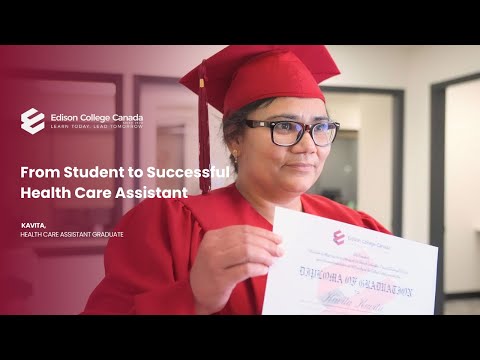

“My experience at Edison College Canada has been very rewarding. The Community Support Worker program, especially the Mental Health and Addiction specialization, has helped me build confidence and real-world skills to support vulnerable individuals in my community. I feel more prepared for my future career.”
Canada’s healthcare sector is one of the most stable and consistently growing industries in the country — and behind every doctor’s office, dental clinic, and specialist practice is a skilled administrator keeping it running. Demand for trained medical and dental office administrators remains strong from coast to coast, driven by an aging population, expanding primary care networks, and sustained government investment in community-based health services across every province.
According to WorkBC, medical administrative assistants (NOC 13112) in British Columbia can expect approximately 2,610 job openings between 2025 and 2035 WorkBC, reflecting consistent provincial demand across doctors’ offices, dental clinics, hospitals, and specialty practices.
In the Lower Mainland–Southwest region alone, the employment outlook for medical administrative assistants is rated Moderate for 2025–2027 — and notably, over the past few years there was a labour shortage in this occupation, with more job openings than available workers to fill them. Job Bank
This pattern of steady demand is not unique to B.C. In B.C.’s North Central region, the employment outlook for medical administrative assistants is rated Very Good for 2025–2027, with employment growth leading to a moderate number of new positions and several roles becoming available due to retirements. Job Bank Similar outlooks are reported in provinces across Canada, where retiring workers and growing patient populations are creating ongoing openings for diploma-trained graduates in both medical and dental settings.
What sets this diploma apart is its dual credential advantage: graduates are qualified to pursue roles in both medical and dental settings — effectively doubling their pool of eligible employers, whether they are based in Victoria, Winnipeg, Halifax, or anywhere in between.
Edison College’s fully online delivery means eligible students across Canada — from British Columbia and Manitoba to New Brunswick and Nova Scotia — can complete this diploma and enter the healthcare administration workforce in their home province without relocating or leaving their community.
Sources: WorkBC — NOC 13112 | Government of Canada Job Bank
Graduates of the Medical & Dental Office Administrator diploma are uniquely positioned to apply for roles across two distinct sectors of the healthcare industry — significantly expanding their employment options compared to single-specialty programs. Career opportunities include:
Medical Settings:
- Medical Administrative Assistant
- Medical Office Assistant (MOA)
- Medical Receptionist
- Medical Secretary
- Ward Secretary
- Health Records Clerk
- Medical Transcriptionist
Dental Settings:
- Dental Office Administrator
- Dental Receptionist
- Dental Billing Specialist
- Dental Office Coordinator
Other Healthcare Settings:
- Physiotherapy Clinic Administrator
- Massage Therapy Clinic Receptionist
- Dermatology Clinic Administrator
- Chiropractic Office Administrator
- Community Health Centre Administrator
In British Columbia, employers include private family practice clinics, specialist offices, Island Health, Vancouver Coastal Health, First Nations Health Authority, and a wide range of private dental and allied health practices across Victoria, the Lower Mainland, and throughout the province.
Medical and dental office administrators work in clean, professional, office-based healthcare environments with structured hours and minimal physical demands. The range of workplaces available to graduates of this dual-credential program is exceptionally broad — and consistent across Canada:
Medical Clinics & General Practice Offices: The most common employer for medical administrative assistants nationwide — private family practice clinics, walk-in centres, and group practices rely heavily on trained administrators to manage scheduling, billing, and patient records. Medical administrative assistants work in the offices of health care professionals, with hours that typically match clinic hours and may include some evenings and weekends. WorkBC
Hospitals & Regional Health Authorities: Health authorities across Canada — such as Island Health in B.C., Alberta Health Services, Nova Scotia Health, and Winnipeg Regional Health Authority — regularly hire medical office assistants and administrative clerks across their networks of hospitals, community clinics, and long-term care facilities. Positions within health authorities often come with comprehensive benefits packages, pension plans, and structured advancement opportunities.
Dental Clinics & Specialist Offices: Private dental practices — from general dentistry to orthodontics, periodontics, and oral surgery — hire dental office administrators to manage the full front-desk operation in every city and town across Canada. These roles typically follow a Monday-to-Friday schedule in a professional, patient-focused environment.
Allied Health Clinics: Physiotherapy, massage therapy, chiropractic, and dermatology clinics employ administrators to handle appointment scheduling, patient intake, billing, and insurance coordination — roles that suit graduates comfortable navigating healthcare-specific software and terminology. These clinics are found in every province and represent a growing share of private healthcare employment across Canada.
Community Health Centres: Organizations delivering primary care to underserved populations — including Indigenous health centres, urban community clinics, and rural primary care networks — employ medical administrative staff to support multidisciplinary care teams. These roles exist in every province and are particularly active in communities experiencing healthcare access challenges.
Remote & Hybrid Roles: Increasingly, medical transcription and health records management functions are performed remotely — making this diploma particularly well-suited to graduates in smaller communities or those seeking flexible work arrangements. The medical transcription component of this program directly prepares graduates for these growing remote opportunities, regardless of where in Canada they are located.
A career in medical and dental office administration offers stable, competitive compensation across Canada — with the dual-sector scope of this diploma giving graduates the flexibility to pursue the strongest opportunities available in their home province, across both medical and dental employers.
In British Columbia, medical administrative assistants typically earn between $21.00 and $32.97 per hour Job Bank — one of the stronger provincial wage ranges in Canada for this occupation, reflecting B.C.’s higher cost of living and robust healthcare sector.
WorkBC reports average annual earnings for medical administrative assistants (NOC 13112) in B.C. of approximately $43,914 WorkBC, with compensation varying based on employer type, region, and years of experience.
Across Canada, wages for this occupation are consistent and stable. Dental receptionists in British Columbia typically earn between $18.00 and $30.00 per hour Job Bank, while those in dental coordination and office management roles command higher rates reflective of their expanded responsibilities — a pattern mirrored in provinces across the country.
Graduates who secure roles within regional health authorities — whether Island Health in B.C., Alberta Health Services, or provincial health networks in Manitoba or the Maritimes — typically access unionized wage grids with regular step increases, extended health and dental benefits, pension contributions, and paid professional development, adding significant total compensation value beyond base wages alone.
Provincial salary highlights for eligible provinces:
The Government of Canada’s Job Bank provides current wage data by province for this occupation. While B.C. and the territories tend to sit at the higher end of the national range, all eligible provinces offer solid compensation for diploma-trained graduates — with salaries generally reflecting local cost of living, employer type, and years of experience. Graduates are encouraged to consult the Government of Canada Job Bank for the most current wage data in their home province.
Sources: WorkBC — NOC 13112 | Government of Canada Job Bank — Medical Administrative Assistant BC | Government of Canada Job Bank — Dental Receptionist BC