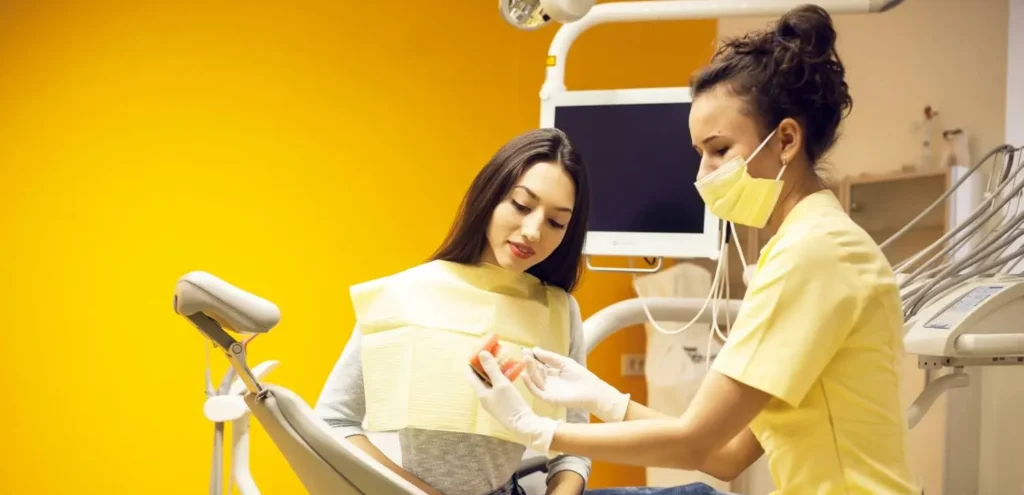
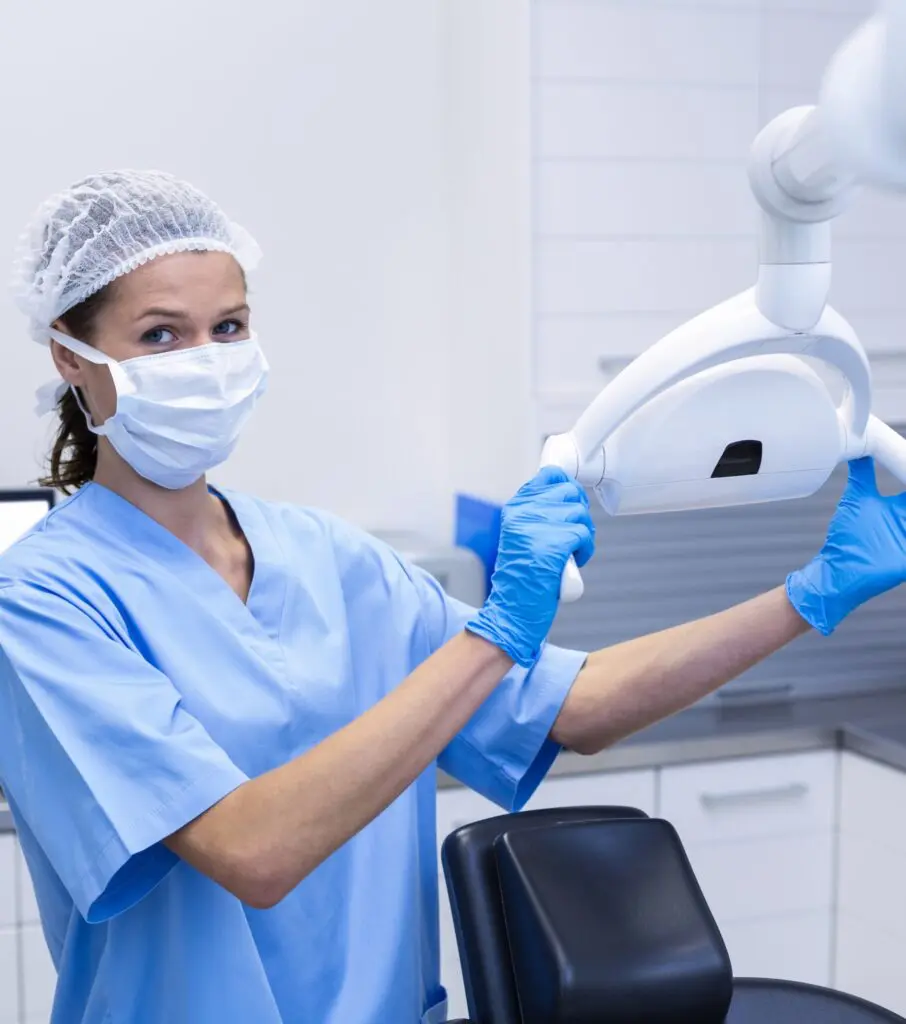
The dental sector is one of the most active and consistently staffed areas of healthcare employment in Canada—and demand for trained dental assistants is growing across every type of practice, from private clinics and orthodontist offices to community health centers and hospital dental departments.
In B.C., WorkBC has designated dental assistants and dental laboratory assistants as high opportunity occupations—a provincial designation reserved for fields with strong, sustained demand over the coming decade.
Dental assistants and dental laboratory assistants (NOC 33100) in British Columbia (B.C.) can expect approximately 3,130 job openings between 2025 and 2035, with average annual earnings of $54,282, according to WorkBC.
An important note about this program: Chairside dental assistants in B.C. are not regulated and do not need to be certified to work WorkBC—meaning graduates of this 16-week diploma can enter the workforce directly as trained chairside assistants. Completion of this program does not qualify graduates to apply for certification as a Certified Dental Assistant (CDA) with the BC College of Oral Health Professionals (BCCOHP); for information on the CDA certification pathway, please visit the BCCOHP website.
Graduates of the chairside dental assistant diploma are prepared for hands-on patient care and clinical support roles across the full spectrum of dental practice environments in Canada. Career opportunities include:
- ✔
Chairside Dental Assistant
- ✔
Dental Assistant (General Practice)
- ✔
Orthodontic Assistant
- ✔
Oral Surgery Assistant
- ✔
Endodontic / Prosthodontic Assistant
- ✔
Pediatric (Pedodontic) Dental Assistant
- ✔
Dental Receptionist / Front Desk Coordinator
- ✔
Dental Records Clerk
- ✔
Dental Sales Representative (Entry-Level)
- ✔
Dental Supply / Distribution Company Representative
Dental assistants work in some of the most stable and professionally rewarding healthcare settings available to graduates of a short-duration diploma program in B.C.:
Private Dental Clinics: The primary employer of dental assistants in B.C., accounting for the large majority of all positions in the province. General dentistry practices in Victoria, the Greater Victoria area, and Vancouver Island hire chairside assistants to support daily patient care, instrument sterilization, infection control, and administrative duties.
Specialist Dental Practices: Orthodontist, endodontist, prosthodontist, oral surgeon, and periodontist offices all employ dental assistants with specific chairside support skills — with specialist practices often offering higher wages than general practices. The blended curriculum of this program, covering a range of procedure types and patient care scenarios, prepares graduates to work across these specialty settings.
Hospitals & Community Health Centres: Dental departments within hospitals and community health organizations employ dental assistants for public oral health programs and hospital-based dental services. Dental assistants work in clean, well-lit dentists’ and orthodontists’ offices, hospitals, public health centres, clinics, and educational institutions — and typically work 40 hours per week, with some positions offering Saturday or evening hours. WorkBC
Pedodontist (Pediatric) Offices: Dental practices specializing in child patients employ assistants specifically trained in patient communication and accommodation for diverse patient types — skills developed directly through the patient care and interpersonal communication components of this program.
Dental Sales & Distribution: Graduates with clinical knowledge of instruments, materials, and dental procedures are well-positioned for entry-level roles with dental supply companies, product distributors, and dental manufacturing firms — roles that leverage the procedural and product knowledge gained in the clinical foundations and assisting courses.
Dental Laboratories: Dental laboratory assistants support dental technologists in fabricating dentures and other dental devices — providing an alternative career pathway for graduates interested in the technical production side of the dental sector.
A career in dental assisting in B.C. offers competitive healthcare wages with steady professional growth — and one of the fastest time-to-employment timelines of any health care diploma program available in the province.
In British Columbia, dental assistants (NOC 33100) typically earn between $24.00 and $36.00 per hour Job Bank — reflecting a reliable, above-minimum-wage entry into the healthcare sector immediately upon completing this 16-week program.
WorkBC reports average annual earnings for dental assistants and dental laboratory assistants in B.C. of approximately $54,282 WorkBC — a meaningful annual income for a program completed in just four months, with no prior healthcare experience required.
The provincial median hourly wage for dental assistants in B.C. is $30.00, with experienced professionals earning up to $36.00 per hour CDI College — with B.C., alongside Alberta and Saskatchewan, consistently among the highest-paying provinces for dental assistant roles in Canada.
Chairside Dental Assistant
The expected annual salary range of a chairside dental assistant in Canada is $41,600 to $71,760, with hourly wages typically ranging from $20 to $34.50 per hour, according to the Canadian Job Bank.
Employers in Alberta, British Columbia, and Saskatchewan generally offer higher wages compared to other provinces and territories. Actual salary will depend on factors such as work experience, geographic location, and the size and type of dental practice.
Graduates who choose to pursue further training after entering the workforce have clear advancement pathways available. With additional training and licensing, a chairside assistant can become a Certified Dental Assistant (CDA) — and CDAs who wish to specialize can train in orthodontics or prosthodontics. WorkBC Individuals may also begin their careers as dental assistants and advance to the position of dental hygienist or therapist through further education and training WorkBC — making this diploma a strong professional foundation for those with longer-term ambitions in oral health care.
Please note that this program prepares graduates for chairside dental assisting roles in B.C. Completion does not qualify graduates to apply for CDA certification with the BC College of Oral Health Professionals (BCCOHP). For details on the CDA certification pathway, please visit bccohp.ca.
Sources: WorkBC — NOC 33100 | Government of Canada Job Bank — Dental Assistant BC