Last updated: November 2026. Wage and certification details are checked against WorkBC, Job Bank and BCSLS and reviewed regularly.
To become a phlebotomist in BC, a common route is to train through a medical laboratory assistant (MLA) program that includes phlebotomy, then apply for certification with the BC Society of Laboratory Science (BCSLS). WorkBC groups phlebotomists with medical laboratory assistants under one occupation (NOC 33101), and it states that medical laboratory assistants in BC must be certified by BCSLS.
This guide explains what the work involves, the steps to get there, how long training takes and what the role pays in BC. Edison College Canada teaches phlebotomy as part of its Medical Laboratory Assistant program in Victoria.
What does a phlebotomist do in BC?
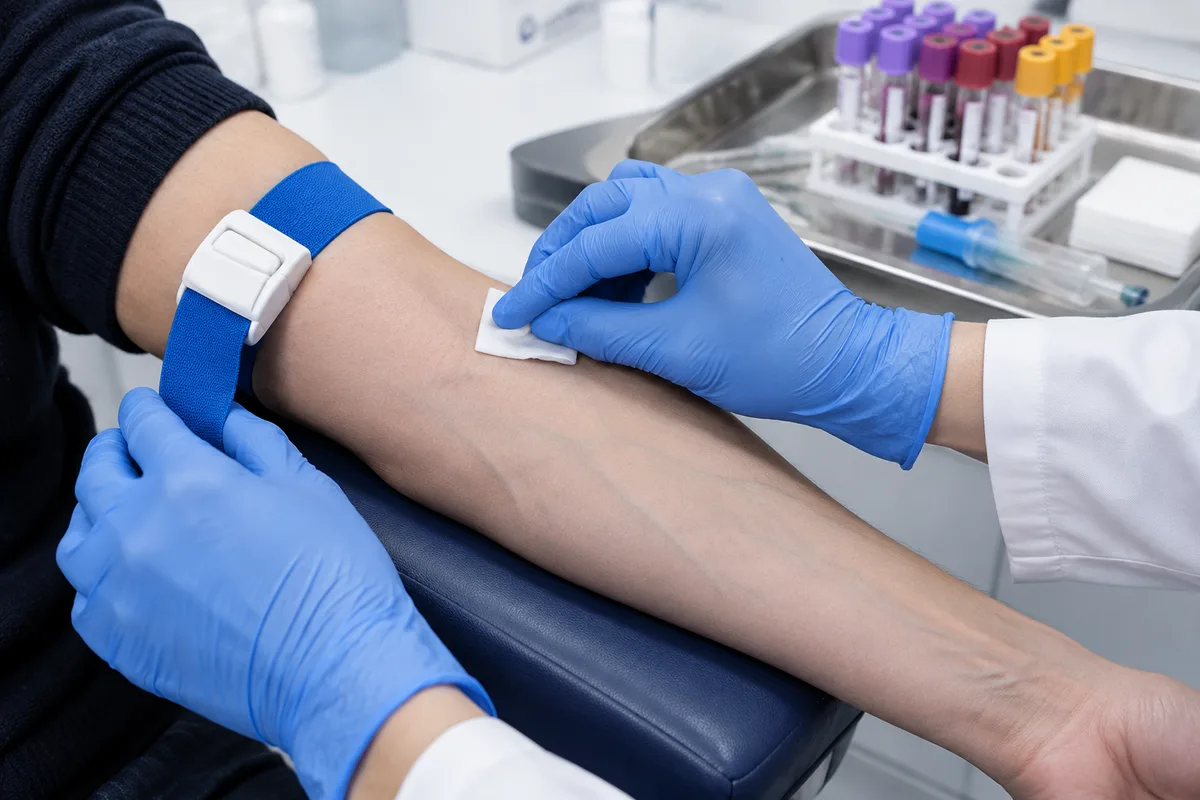
A phlebotomist collects blood and other samples from patients, labels them correctly and prepares them for testing. The work combines technical skill with patient care: putting nervous patients at ease, confirming identity, following infection-control rules and making sure every sample reaches the lab in usable condition.
WorkBC lists phlebotomy roles within medical laboratory assistants and related technical occupations (NOC 33101). Job titles in this group include Medical laboratory assistant, Phlebotomist and Phlebotomy aide. Typical workplaces include hospital labs, community collection sites and private laboratories.
A typical shift can include:
- checking each patient’s identity and the test order before collection
- drawing blood by venipuncture or a finger or heel prick (capillary collection)
- labelling tubes at the point of collection so samples can’t be mixed up
- spinning, sorting and storing specimens so they stay usable for testing
- cleaning work areas and disposing of sharps safely
The role suits people who are calm with patients, careful with detail and comfortable following set procedures. Accuracy matters: a mislabelled or badly handled sample usually has to be collected again.
Phlebotomist vs medical laboratory assistant: what’s the difference?
A phlebotomist focuses on collecting samples. A medical laboratory assistant does phlebotomy too, and also processes specimens, performs ECGs and supports basic lab testing. In BC, the two roles share one occupation code, and MLA training prepares you for both.
| Phlebotomist | Medical laboratory assistant | |
|---|---|---|
| Main tasks | Blood and sample collection, labelling, patient care | Phlebotomy plus specimen processing, ECGs and basic lab support |
| Typical training in BC | Phlebotomy taught within MLA training; standalone courses vary | MLA certificate program, often with a lab practicum |
| Certification in BC | WorkBC states medical laboratory assistants in BC must be certified by BCSLS | |
| Where they work | Hospital labs, community collection sites and private laboratories | |
How to become a phlebotomist in BC (step by step)
The usual route is training, a practicum, BCSLS certification and then job applications.
- Meet the admission requirements. Each program sets its own; Edison lists them on the MLA program page.
- Complete training that includes phlebotomy. For example, a 36-week MLA certificate that covers phlebotomy, specimen handling and ECGs.
- Complete a practicum in a working lab. This is where you practise collection and processing with real workflows.
- Apply for BCSLS certification. Graduates of BCSLS-approved MLA programs can apply for certification after graduating. Certification is not automatic; you apply and meet BCSLS requirements.
- Apply to labs, hospitals and collection sites. Hiring depends on the employer, location and your experience.
BCSLS advises choosing an approved MLA program; it says graduates of approved programs get “preferential hiring by health authorities and Lifelabs in BC.” That is BCSLS’s statement about approved programs in general, not a promise of employment from any school.
Phlebotomy and MLA pay in BC
The median wage for medical laboratory assistants in BC is $28.00 an hour, according to Job Bank (NOC 33101, wages updated November 19, 2025). This occupation includes phlebotomists.
| Area | Low ($/hour) | Median ($/hour) | High ($/hour) |
|---|---|---|---|
| British Columbia | $20.50 | $28.00 | $31.00 |
| Vancouver Island and Coast | $27.00 | $28.42 | $29.65 |
WorkBC reports annual earnings of $47,733 for this occupation in BC and forecasts 2,210 job openings in the province from 2025 to 2035. These figures describe the whole occupation, including experienced workers. They do not predict what a new graduate will earn; pay depends on the employer, location, hours and experience. For a national comparison, see our guide to medical lab assistant salary.
What you’ll learn in phlebotomy and MLA training
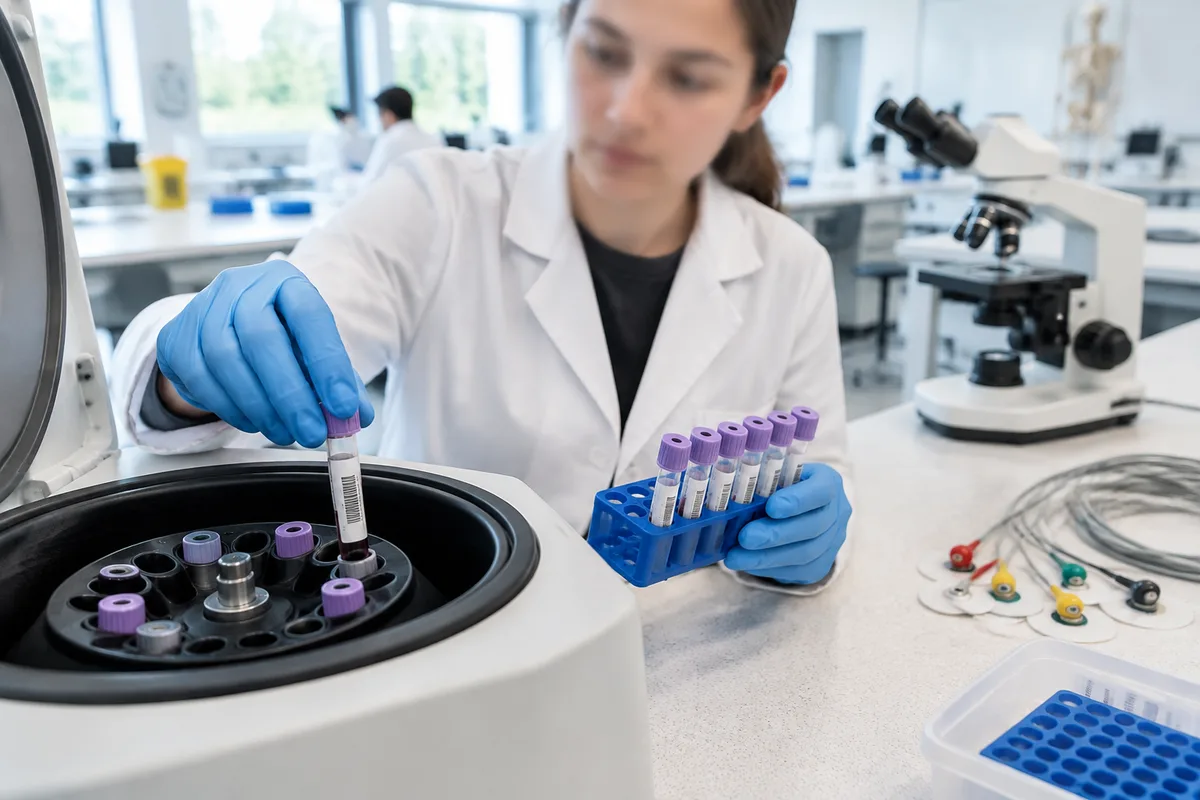
MLA training teaches blood collection alongside the lab skills that surround it. In Edison’s program, courses include:
- Phlebotomy in the Medical Laboratory: blood collection techniques and patient preparation
- Laboratory Safety and Asepsis: infection control and safe handling
- The Cardiovascular System and ECGs
- Hematology, Clinical Chemistry and Clinical Microbiology Basics
- Urinalysis and Bodily Fluids and An Introduction to Histology and Cytology
- Medical terminology, anatomy and physiology, and laboratory mathematics
- Healthcare Communication Basics and Professionalism and Ethics
See the full course list for phlebotomy and ECG training on the program page. If you want a broader view of the MLA role, read how to become a medical lab assistant.
How long does phlebotomy training take in BC?
Edison’s Medical Laboratory Assistant certificate takes 36 weeks: 30 weeks of theory (750 hours) and a 6-week practicum (120 hours). Standalone phlebotomy courses vary in length and typically focus on collection, not the specimen processing and ECG skills an MLA certificate includes.
When you compare programs, check three things: whether the program is on the BCSLS approved list, whether it includes a practicum in a working lab, and where that practicum takes place. A shorter program is only a shortcut if it still lets you apply for the certification BC employers look for.
If you searched for a six-month phlebotomy course, an MLA certificate takes longer, at about eight months. Check whether a shorter course is on the BCSLS approved list before you enrol.
Training with Edison College in Victoria
Edison College Canada offers its Medical Laboratory Assistant certificate at its Victoria campus, in-class or hybrid. In the hybrid option, theory is online, and hands-on skills training happens in person.
- Practicum: in Victoria, at partner labs such as LifeLabs or Island Health; placements depend on availability.
- BCSLS approval: BCSLS lists Edison College, Victoria, as an approved MLA program, so graduates can apply for BCSLS certification.
- Who can attend: because blood collection skills and the practicum are in person in Victoria, the program suits people who live on, or can relocate to, Vancouver Island.
- Tuition: see the program page for current tuition and fees.
Thinking about phlebotomy or MLA training in Victoria? Request the MLA info kit for course details, start dates and admission requirements.
Frequently asked questions
Do I need a certificate to work as a phlebotomist in BC?
Generally, yes. WorkBC states that medical laboratory assistants in BC must be certified by the BC Society of Laboratory Science (BCSLS), and phlebotomists are part of that occupation. Graduates of BCSLS-approved MLA programs can apply for certification; it is not automatic.
How long does phlebotomy training take in BC?
It depends on the program. Edison’s Medical Laboratory Assistant certificate, which includes phlebotomy, takes 36 weeks: 30 weeks of theory and a 6-week practicum. Standalone phlebotomy courses vary in length and typically focus on collection.
Is phlebotomy included in a medical laboratory assistant program?
Yes. MLA programs in BC teach phlebotomy alongside specimen processing, ECGs and basic lab skills. Edison’s MLA certificate includes a course called Phlebotomy in the Medical Laboratory, plus a lab practicum.
Can I do phlebotomy training online?
Only partly. Theory can be studied online, but blood collection is a hands-on skill, so skills training and the practicum are in person. At Edison College, the practicum takes place in Victoria, BC.
How much do phlebotomists and lab assistants earn in BC?
The BC median is $28.00 an hour for medical laboratory assistants, including phlebotomists, according to Job Bank (NOC 33101, updated November 19, 2025). Pay depends on employer, location, hours and experience, and these figures do not predict a new graduate’s wage.
What is the difference between a phlebotomist and a medical laboratory assistant?
A phlebotomist focuses on collecting blood and other samples. A medical laboratory assistant also collects samples, and processes specimens, performs ECGs and supports basic lab testing. In BC, both fall under the same occupation, NOC 33101.
Next steps
Phlebotomy in BC is usually learned through MLA training, followed by BCSLS certification. If you want to train in Victoria, compare the courses, practicum and tuition on Edison’s Medical Laboratory Assistant program page, or request the info kit.