Canada’s pharmacy sector is one of the most consistently in-demand corners of the healthcare industry — present in every city, town, and rural community across the country. As the population ages and prescription volumes continue to rise, the need for trained pharmacy assistants who can support pharmacists efficiently and accurately has never been stronger.
According to WorkBC, pharmacy technical assistants and pharmacy assistants (NOC 33103) in British Columbia can expect approximately 1,170 job openings between 2025 and 2035 WorkBC — a steady stream of opportunities across retail pharmacies, hospital settings, long-term care facilities, and community clinics throughout the province.
Nationally, the picture is equally encouraging. Over the period 2022–2031, new job openings for pharmacy technical assistants and pharmacy assistants across Canada are projected to total 25,400 — with slightly more openings than job seekers available to fill them Nationwide Visas, indicating a labour market that consistently favours diploma-trained candidates.
A key advantage of this field is its presence everywhere. Unlike some healthcare roles concentrated in major urban centres, pharmacy positions exist in independent community pharmacies, national retail chains, hospital dispensaries, long-term care homes, and compounding pharmacies from Victoria and Vancouver to Fredericton and beyond. Wherever you live in Canada, there is a pharmacy nearby that needs trained support staff.
Edison College’s fully online delivery means eligible students across Canada — from British Columbia and Manitoba to New Brunswick and Nova Scotia — can complete this diploma and enter the workforce in their home community without relocating or leaving their current responsibilities behind.
Sources: WorkBC — NOC 33103 | Government of Canada Job Bank
Graduates of the Pharmacy Assistant diploma are prepared to work across a wide variety of pharmacy and healthcare settings, under the direct supervision of a licensed pharmacist. Career opportunities include:
- Pharmacy Assistant
- Hospital Pharmacy Assistant
- Clinic Pharmacy Assistant
- Compounding Pharmacy Assistant
- Pharmacy Distribution Clerk
- Dispensary Assistant
- Pharmacy Aide
- Long-Term Care Pharmacy Assistant
Employers across Canada hiring pharmacy assistants include major retail pharmacy chains such as Shoppers Drug Mart, London Drugs, Rexall, and Walmart Pharmacy, as well as hospital pharmacy departments, independent community pharmacies, compounding pharmacies, long-term care facilities, and health authority-operated dispensaries.
Pharmacy assistants work in structured, professional healthcare environments that are consistent in nature across Canada — making this one of the most geographically portable careers available to diploma graduates. Common work environments include:
Community & Retail Pharmacies: The largest employer category for pharmacy assistants nationwide — from independent neighbourhood pharmacies to large national chains. Pharmacy technical assistants and pharmacy assistants work in pharmacies and compounding pharmacies, which are sometimes located within hospitals, department stores, and grocery stores. WorkBC These roles involve daily patient interaction, prescription processing, inventory management, and software-based documentation.
Hospital Pharmacies: Hospital-based roles offer a more specialized and fast-paced environment, with pharmacy assistants supporting pharmacists in preparing unit-dose medications, managing automated dispensing systems such as PACMED machines, and fulfilling orders for clinical wards. Hospital positions often come with health authority benefits packages, unionized pay grids, and shift-based schedules.
Long-Term Care Facilities: Pharmacy assistants in long-term care settings manage medication distribution for residents on an ongoing basis, ensuring accurate records, timely refills, and compliance with care plans. These roles are found in every province and are particularly active as Canada’s senior population grows.
Compounding Pharmacies: Graduates with training in compounding principles — a core component of this diploma — are well positioned for specialized roles in compounding pharmacies, where custom medications are prepared for individual patient needs. This is a growing niche that values diploma-trained candidates.
Health Clinics & Medical Centres: Some multi-disciplinary health clinics and primary care networks operate in-house dispensaries, employing pharmacy assistants to manage medication supplies and support clinical pharmacy services.
Because most pharmacies are open weekends and evenings, employees often work outside of regular daytime hours WorkBC — making this a field with flexible scheduling options that can suit a variety of lifestyles and personal commitments.
A career as a pharmacy assistant offers stable and competitive compensation across Canada, with wages that reflect the precision, responsibility, and patient-care skills the role demands.
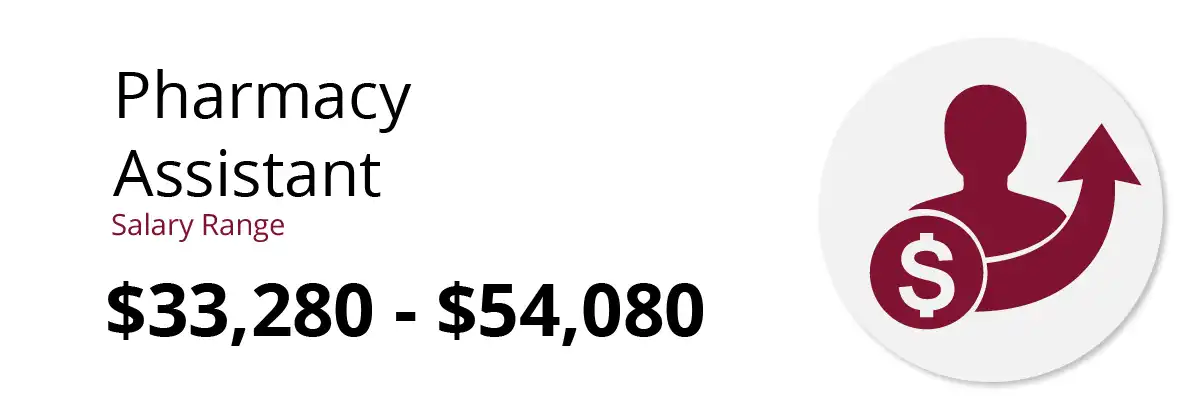
In British Columbia, pharmacy assistants typically earn between $17.85 and $30.00 per hour Job Bank, with B.C. sitting at the higher end of the national wage range — reflecting the province’s higher cost of living and strong retail pharmacy market.
WorkBC reports average annual earnings for pharmacy assistants and pharmacy technical assistants (NOC 33103) in B.C. of approximately $32,425 WorkBC at the entry level, with wages increasing meaningfully as experience, employer type, and specialization develop.
Nationally, pharmacy assistants in Canada typically earn between $15.80 and $29.00 per hour Job Bank, with compensation varying by province, employer type, and setting. Hospital-based and health authority positions generally offer higher total compensation through unionized wage grids, extended health and dental benefits, pension plans, and paid professional development — adding significant value beyond base wages alone.
Graduates who work in compounding pharmacies or advance into senior pharmacy assistant or supervisory roles can expect wages at the higher end of the provincial range. With experience, pharmacy technical assistants and pharmacy assistants may become supervisors WorkBC — opening a clear advancement pathway within the same field.
Studying from another province? Pharmacy assistant wages are consistent and competitive across all eligible provinces. Graduates are encouraged to consult the Government of Canada Job Bank for the most current wage data specific to their home province — and to note that employers in territories such as Yukon and the Northwest Territories frequently offer premium wages to attract qualified candidates.
Sources: WorkBC — NOC 33103 | Government of Canada Job Bank — Pharmacy Assistant BC | Government of Canada Job Bank — Canada