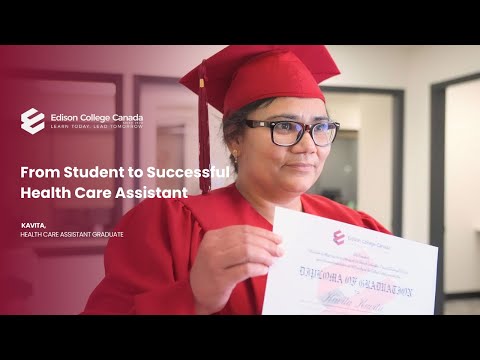
“My experience at Edison College Canada has been very rewarding. The Community Support Worker program, especially the Mental Health and Addiction specialization, has helped me build confidence and real-world skills to support vulnerable individuals in my community. I feel more prepared for my future career.”
Health care assistants are among the most needed and most valued front-line workers in British Columbia’s health care system — and the demand for trained, registered HCAs has never been stronger. Across acute care hospitals, long-term care facilities, assisted living communities, group homes, and home support settings, B.C.’s ageing population and expanding health care infrastructure are driving sustained, province-wide need for compassionate, skilled care aides.
In B.C., WorkBC has designated nurse aides, orderlies, and patient service associates — the occupational group that includes health care assistants — as a High Opportunity Occupation. HCAs (NOC 33102) in B.C. can expect approximately 22,990 job openings between 2025 and 2035, with average annual earnings of $49,756 WorkBC — the largest job opening projection of any program offered at Edison College, and a direct reflection of the critical and irreplaceable role HCAs play in B.C.’s health care system.
Demand is especially high in long-term care facilities and privately-run institutions, and in rural and remote areas. As a result, where there is strong demand, salaries are rising. The Canadian population aged 85 and older is one of the fastest-growing age groups — a demographic trend that means demand for care aides will continue to increase for years to come. WorkBC
On Vancouver Island, the outlook is equally compelling. Island Health has noted that as Vancouver Island’s population continues to age, demand for services is expected to grow — with allied health and support roles growing by 2,500 net new employees in recent years, stabilizing staffing and strengthening care across the region. Victoria News New long-term care facilities are also planned for communities across the Island, including Colwood — creating additional local employment for trained HCAs graduating from Victoria-area programs.
Almost every region of the province has strong demand for HCAs, meaning that graduates can live and work almost anywhere in British Columbia once they receive recognized training and register as a Health Care Assistant. Vancouver Coastal Health
This program has been reviewed and approved by the Private Training Institutions Regulatory Unit (PTIRU) and delivers the provincial HCA curriculum, enabling graduates to register with the BC Care Aide & Community Health Worker Registry — the registration required to work in any publicly funded health care setting in B.C.
Sources: WorkBC — NOC 33102 | Government of Canada Job Bank — Health Care Aide BC | Choose2Care BC
Graduates of the Health Care Assistant diploma are prepared for front-line caregiving roles across the full spectrum of B.C.’s health care settings — and the Registry qualification opens doors throughout the province. Career opportunities include:
Residential & Long-Term Care:
- Care Aide — Complex / Long-Term Care
- Care Aide — Dementia / Memory Care Unit
- Care Aide — Multi-Level Care Facility
- Residential Care Worker
Community & Home-Based Settings:
- Home Support Worker
- Community Health Worker
- Assisted Living Worker
- Group Home Worker
- Adult Day Care Worker
Acute & Specialized Care:
- Acute Care Aide (Hospital Setting)
- Palliative / Hospice Care Aide
- Mental Health Support Worker (Care Aide)
- Rehabilitation Care Aide
Additional Settings:
- Patient Service Associate
- Orderly (Hospital)
- Hospice / End-of-Life Care Aide
Care aides work in hospitals and private and public long-term care facilities — including group homes, hospices, and facilities focused on acute care, long-term care, multi-level/complex care, dementia care, assisted living, mental health, and pre- and post-surgery care. WorkBC
B.C.’s health authorities — Island Health, Vancouver Coastal Health, Fraser Health, Interior Health, Northern Health, and Providence Health Care — are among the largest and most stable employers of HCAs in the province, offering comprehensive benefits packages and pension plan access for eligible employees.
Health care assistants work in some of the most meaningful and human-centred environments in the B.C. economy — settings where the work they do directly and tangibly improves the lives of patients, residents, and families every single day:
Long-Term Care & Complex Care Facilities: The largest single employer category for HCAs in B.C. — residential care homes and complex care facilities employ care aides to provide daily personal care, mobility assistance, feeding support, and cognitive and emotional support for residents with a range of health conditions including dementia, diabetes, and age-related complex needs. Victoria and the Greater Victoria area have a strong and growing network of care facilities, including those operated by Island Health, private operators, and non-profit care societies.
Home Support & Community Care: HCAs working in home support and community settings assist clients in their own homes — supporting independence, personal care, and daily living activities for individuals who prefer to remain at home. Care aides work in hospitals and private and public long-term care facilities, as well as in home support, assisted living, mental health, and community settings. WorkBC This is one of the most flexible and relationship-centred settings available to HCA graduates.
Acute Care Hospitals: Island Health’s hospitals — including Victoria General Hospital, Royal Jubilee Hospital, and other regional acute care facilities across Vancouver Island — employ HCAs as patient service associates and care aides in medical, surgical, palliative, and rehabilitation wards. These roles involve supporting nurses and allied health professionals in fast-paced hospital environments.
Assisted Living & Group Homes: Assisted living communities and group homes serve seniors and adults with disabilities who require some support but wish to maintain their independence. HCAs in these settings provide care that is typically less intensive than complex care, with a strong emphasis on client autonomy and daily living support.
Adult Day Care Centres: Day programs for seniors and adults with complex needs employ HCAs to provide structured, social, and health-supportive activities during day hours — a setting that appeals to graduates seeking regular daytime schedules.
Hospice & Palliative Care: Victoria has a strong network of hospice and palliative care services, and HCAs trained in end-of-life care principles — a component of this diploma — are valued and compassionate members of these teams.
A career as a health care assistant in B.C. offers reliable, above-average healthcare wages — backed by collective agreements, comprehensive benefits packages, and pension plan access through many of the province’s publicly funded health authorities.
In British Columbia, health care aides (NOC 33102) typically earn between $22.37 and $29.83 per hour Job Bank, with wages rising steadily alongside B.C.’s continued investment in health care workforce capacity.
According to the Health Employers Association of BC, the starting hourly wage for an HCA working in a publicly funded setting ranges from $27.92 to $29.83 (as of April 2024), depending on the employment sector — and eligible employees have access to a comprehensive benefits package and pension plan through the Municipal Pension Plan. Choose2care
WorkBC reports average annual earnings for HCAs in B.C. of approximately $49,756 WorkBC — a reliable professional income, typically accessed within weeks of completing this 32-week program and registering with the BC Care Aide Registry.
In areas of especially strong demand, salaries are rising further as health authorities and private operators compete to attract and retain qualified staff. WorkBC Part-time, casual, and full-time positions are available across most regions of B.C., with most graduates starting with casual or part-time employment and working up to full-time status gradually Choose2care — building seniority, experience, and earning potential in the process.
For graduates who wish to advance, the HCA credential is an established foundation for further health care education. After completing the HCA program and working 600 hours as an HCA, graduates may be eligible for Practical Nursing access programs — offering a clear pathway toward Licensed Practical Nurse (LPN) designation and significantly higher earnings.
Sources: WorkBC — NOC 33102 | Government of Canada Job Bank — Health Care Aide BC | Choose2Care BC