User interface (UI) and user experience (UX) design has emerged as one of the most in-demand and rapidly growing specializations in Canada’s technology and digital economy. As organizations across every sector invest in digital products, mobile applications, and web platforms, the demand for designers who can create intuitive, accessible, and engaging user experiences has never been higher — and this demand extends well beyond technology companies into healthcare, finance, retail, government, and education.
In British Columbia, UI and UX designers most commonly enter the workforce through the web designers and web developers occupational pathway. Web developers and programmers (NOC 21234) in B.C. can expect approximately 6,160 job openings between 2025 and 2035, with average annual earnings of $71,481 WorkBC — reflecting strong, sustained demand for professionals who combine visual design skills with technical web competency. Recent graduates with this type of training often find jobs specifically in user interface (UI) or user experience (UX) design, design production, animation, game design, and basic web programming. WorkBC
Digital marketing, e-commerce, e-learning, and social media are actively driving demand for this occupation — with user experience (UX) and user interface (UI) design identified as key growth areas within B.C.’s broader digital design landscape. Job Bank AI-assisted design tools, 3D interfaces, and accessibility-first design practices are also reshaping the profession, creating new opportunities for graduates who build skills across both the design and technical dimensions of the field.
Nationally, the average base salary for UX designers in Canada is approximately $72,000 annually — above the national mean salary across all occupations Coursera — reflecting the premium placed on professionals who can bridge visual design thinking with technical implementation skills.
This diploma’s combination of Adobe XD, wireframing, prototyping, information architecture, HTML5, CSS3, JavaScript, and portfolio development directly addresses the dual skillset that B.C. and Canadian employers are seeking in UI/UX professionals. Ongoing education is key to this role because of continuous changes in technology — web designers and UX professionals must continue to learn new skills to stay current. WorkBC
Edison College offers this program both in-class at our Victoria campus and fully online — meaning students across Canada can build job-ready UI/UX skills without relocating.
Sources: WorkBC — NOC 21234 | Government of Canada Job Bank — UX Designer Canada | Coursera — UX Designer Salary Canada 2026
Graduates of the UI/UX Design diploma are prepared for a range of creative and technical roles across the digital design, web development, and product design industries — with a curriculum that bridges visual thinking and front-end technical skills. Career opportunities include:
UI/UX Design Roles:
- Junior UI/UX Designer
- UI Designer
- UX Designer
- Interaction Designer
- Visual Designer
- Product Designer (Entry-Level)
Research & Strategy:
- UX Researcher (Entry-Level)
- UX Content Strategist / Writer
- Usability Analyst
- Information Architect
Web & Digital Roles:
- Web Designer
- Front-End UI/UX Developer
- Digital Designer
- Interactive Designer
- Web / App Prototype Specialist
Creative & Production:
- Multimedia Designer
- Digital Content Designer
- Creative Production Specialist
Web designers and UX professionals work in computer software development firms, information technology consulting companies, and advertising agencies — as well as in the IT and marketing and communications departments of large organizations across the private and public sectors. Some are self-employed. WorkBC
B.C.-based employers span technology companies, digital agencies, SaaS startups, healthcare technology firms, financial institutions, e-learning platforms, and government digital services teams — all of which are actively investing in user-centred design capability.
UI/UX designers work in some of the most creative and collaborative professional environments in the Canadian economy — with strong and growing options for remote and hybrid work:
Technology Companies & SaaS Firms: The primary employer category for UI/UX designers across B.C. and Canada — software companies and SaaS platforms employ UI/UX designers to research user needs, design interfaces, build prototypes, and test products across desktop and mobile environments. Vancouver’s technology sector includes major employers such as Hootsuite, Salesforce, and Microsoft alongside hundreds of growing product companies.
Digital Agencies & Design Studios: Web and digital agencies employ UI/UX designers to deliver client projects across branding, web design, app design, and digital campaign work. These roles offer exposure to diverse industries and project types, building a strong portfolio rapidly.
Financial Services & Fintech: Banks, credit unions, and financial technology companies invest heavily in UX to improve digital banking platforms, mobile apps, and customer-facing services — making this one of the more active hiring sectors for UI/UX talent in B.C. and nationally.
Healthcare & E-Learning: Hospitals, health technology companies, and digital education platforms employ UI/UX designers to improve the usability of patient portals, clinical tools, learning management systems, and public health applications — sectors experiencing consistent growth in B.C.
Government & Public Sector: Federal and provincial government digital services teams employ UX researchers and UI designers to improve citizen-facing web platforms and digital services. Victoria’s concentration of provincial government offices creates accessible local opportunities for graduates based on Vancouver Island.
Remote & Freelance Work: Web designers and UX professionals may work remotely or from home WorkBC — and the prototype-and-feedback-driven nature of UI/UX work is highly suited to remote collaboration tools. The portfolio built through this diploma’s Capstone Project and Career Prep course is directly designed to support both employment and freelance client acquisition.
A career in UI/UX design in Canada offers competitive compensation with strong growth potential — particularly for professionals who develop both the design thinking and technical front-end skills that employers increasingly value.
In Canada, user experience designers (NOC 52120) typically earn between $20.00 and $52.88 per hour Job Bank, with B.C. and Ontario consistently among the higher-paying provinces for digital design professionals.
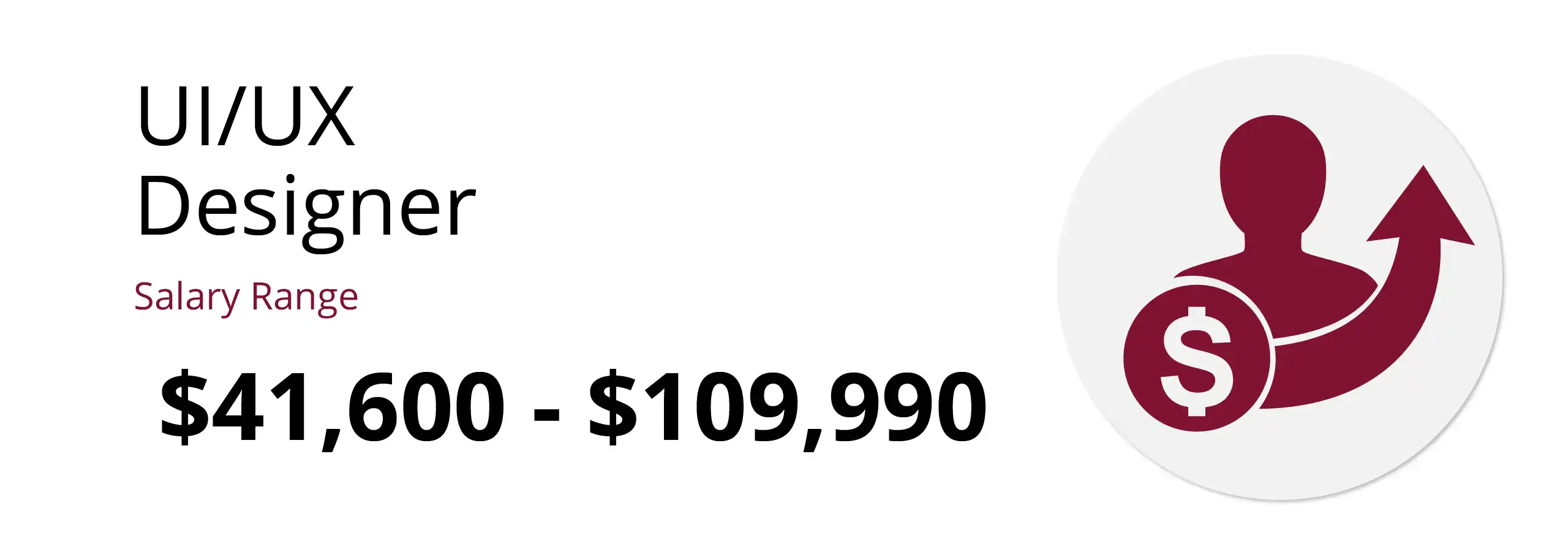
In Vancouver specifically, compensation data reflects a healthy range for UI/UX professionals at all career stages. UI designers in Vancouver typically earn an average of $69,395 per year, with top earners reaching $101,614 annually Glassdoor — with a pay range of $56,770 to $84,827 for the middle 50% of earners. UI/UX designers in Vancouver earn an average of approximately $62,795 per year, with top earners reaching $113,173 annually. Glassdoor
Nationally, the average salary for a UI/UX designer in Canada is approximately $65,604 per year, with top earners reaching $108,717 annually Glassdoor — confirming competitive compensation relative to the national average across all occupations.
Career progression in UI/UX design offers meaningful salary growth. Entry-level UX designers in Canada can expect salaries from approximately $41,000 to $99,000, while experienced senior UX designers with five or more years of experience can earn $123,000 to $182,000 annually. Glassdoor Graduates who build a strong portfolio, develop proficiency in Adobe XD alongside front-end coding skills, and specialize in high-demand areas such as SaaS product design or accessibility-focused UX are best positioned to reach the upper end of the compensation range.
Studying from another province? UI/UX design roles exist across every major city in Canada, with strong markets in B.C., Ontario, and Quebec. The remote-compatible nature of design work means graduates can work for clients and employers nationally. Graduates are encouraged to consult the Government of Canada Job Bank for current wage data specific to their home province.
Sources: Government of Canada Job Bank — UX Designer Canada | Glassdoor — UI Designer Vancouver | Glassdoor — UI/UX Designer Canada